Depression
Major depressive disorder, including treatment-resistant depression.
Non-Invasive Brain Stimulation
Beyond Medication Alone
If you live with depression, anxiety, OCD, PTSD or persistent insomnia, you may have already tried antidepressants, therapy or both, only to find that the relief was partial, slow to arrive or accompanied by side effects you could not tolerate. Roughly one in three people with depression do not respond fully to the first two medications they try, a pattern often called treatment-resistant depression. That experience can leave you discouraged, exhausted and unsure where to turn next for support that genuinely fits your life and your goals.
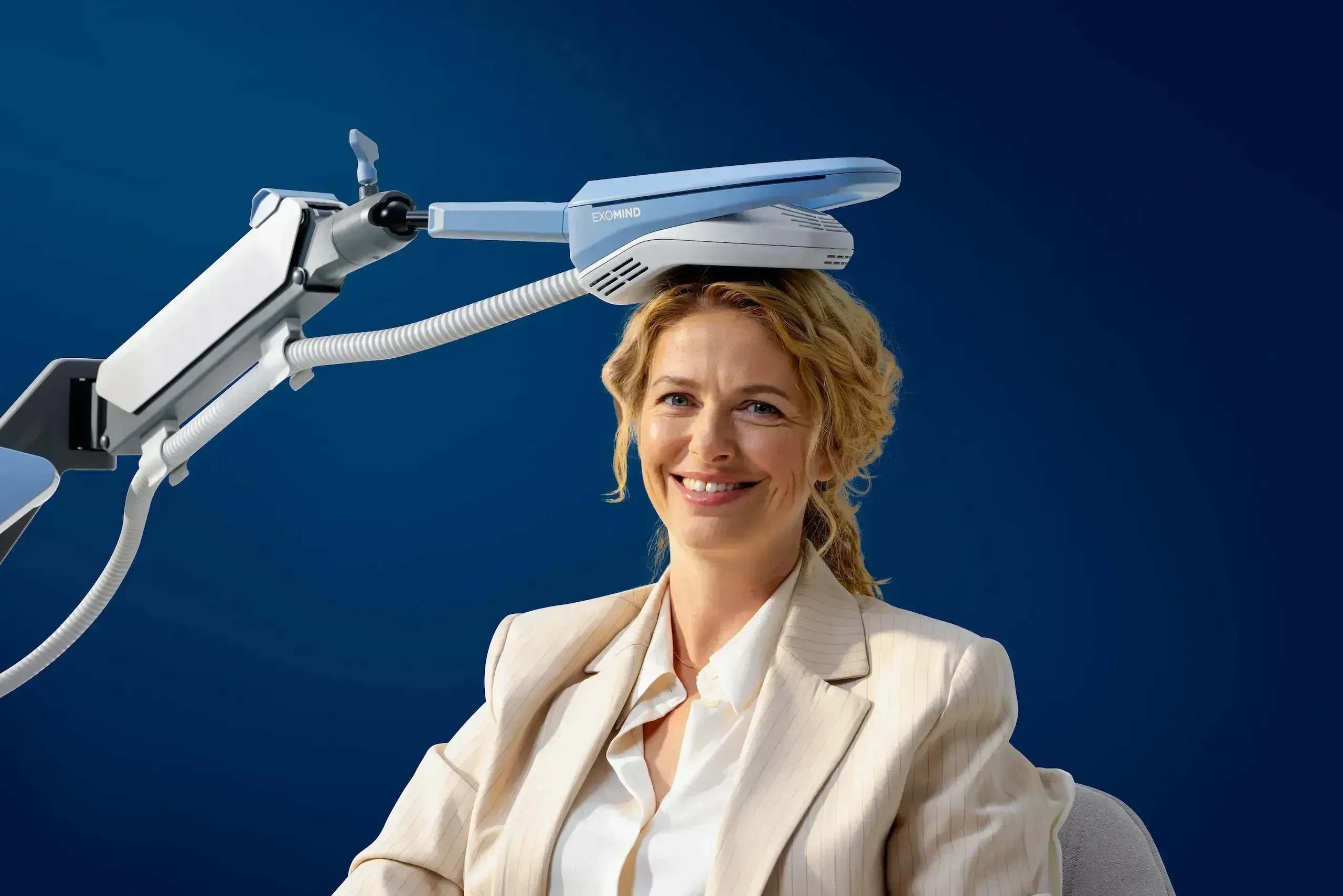
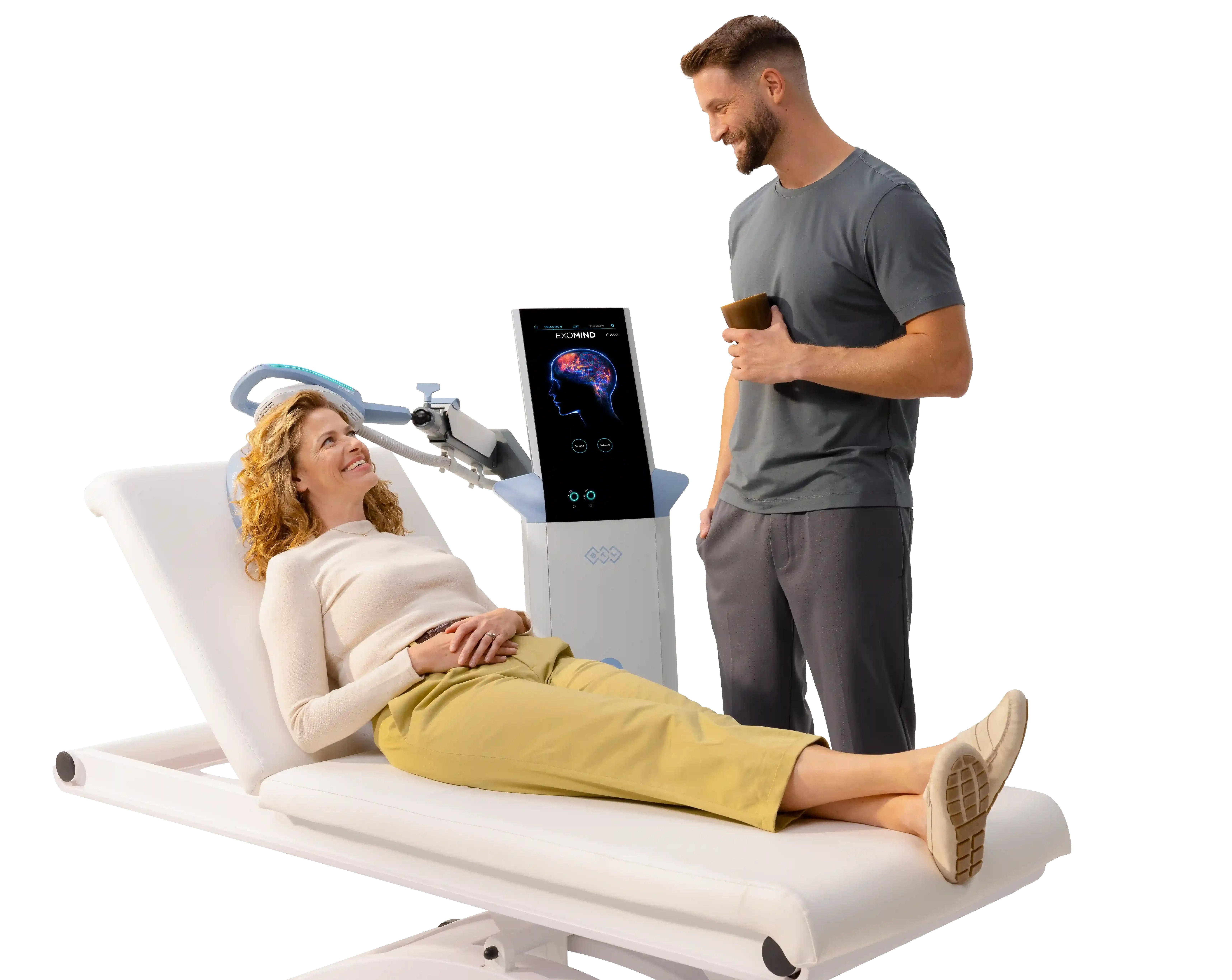
TMS therapy with Exomind offers a different path. Instead of working through your bloodstream, it uses gentle, focused magnetic pulses to stimulate the specific brain regions involved in mood, anxiety and sleep. Sessions are short, performed in our calm Easley office, and require no anesthesia, no sedation and no recovery time. You sit comfortably in a chair, listen to music or chat, and walk out ready to drive yourself home or return to work, school or family the same afternoon.
How Magnetic Stimulation Works
Transcranial Magnetic Stimulation, or TMS, is a non-invasive brain stimulation technology that uses targeted magnetic fields, similar in strength to those used in an MRI, to gently activate underactive areas of the brain. The U.S. Food and Drug Administration first cleared TMS for major depressive disorder in 2008, and additional clearances have followed for OCD, anxious depression and smoking cessation. You can read more about its evidence base on the National Institute of Mental Health overview and the FDA public clearance database.
Exomind, developed by BTL Aesthetics, is the latest generation of TMS technology and the device we use here at Riverstone Wellness. It delivers focused pulses to the dorsolateral prefrontal cortex, a brain region linked to mood regulation, decision-making and emotional resilience. Over a course of sessions, those repeated pulses help strengthen healthier neural pathways, a process clinicians call neuroplasticity, in plain English, your brain learning new, more flexible patterns of thinking and feeling.
Treatment is performed in a comfortable chair in our private treatment suite. There are no needles, no IVs, no anesthesia and no sedation. You stay fully awake and alert throughout, and you can listen to music, watch a show or simply rest your eyes. The average course is 6 sessions over six weeks, with many patients noticing benefits as soon as the first treatment.
Gentle, Targeted, Lasting
2000+ Satisfied patients






No needles, no anesthesia, no sedation, just focused magnetic pulses.
An alternative or complement when antidepressants are not enough.
Drive yourself home and return to work, school or family right away.
Stimulates the specific brain regions tied to mood and anxiety.
Many patients maintain remission for months or longer after a full course.
Not covered by most insurances; Medicare may cover this service in some cases.
Compare Your Options
| Treatment | Mechanism | Time | Results | Duration | Downtime | Best For |
|---|---|---|---|---|---|---|
| TMS with Exomind | Focused magnetic pulses to the prefrontal cortex | 20 to 30 minutes | Improvement in 2 to 4 weeks | Months to years | None | Treatment-resistant depression, anxiety, OCD |
| Antidepressant Medication Only | Adjusts brain chemistry through the bloodstream | Daily oral dose | 4 to 8 weeks for response | While taking medication | Possible side effects | First-line depression and anxiety |
| ECT (Electroconvulsive Therapy) | Induces brief seizure under anesthesia | Hospital visit, 5 to 10 minutes | Rapid response, often days | Months, often needs maintenance | Hours of recovery, memory effects | Severe, life-threatening depression |
| Ketamine Therapy | NMDA receptor modulation by IV or nasal spray | 40 to 60 minutes per infusion | Hours to days | Weeks, frequent boosters | Several hours of monitoring | Acute suicidal depression |

Candidacy and Safety
TMS therapy with Exomind is most often considered for adults who have struggled to find lasting relief through medication and therapy alone, especially those living with treatment-resistant depression, persistent anxiety or OCD. During your consultation, Christina will review your history, current treatments and goals to confirm whether Exomind is the right next step or whether another mental health pathway would serve you better.
If TMS is not the right fit today, we will guide you toward another evidence-based option in our practice, from adult psychiatry in Easley, SC services to medication management, all delivered with the same time-honoring approach.
Step by Step
Christina reviews your history, current medications and goals to confirm TMS is the right fit.
Christina uses Exomind to locate your motor threshold and personalize the treatment coordinates.
You relax in a chair while Christina positions the Exomind coil and delivers gentle magnetic pulses.
Christina checks in at each visit and documents your mood, sleep and anxiety scores over time.
After your treatment course, Christina reviews progress and plans any maintenance you may need.
What to Watch For
TMS therapy with Exomind is well tolerated and avoids the systemic side effects of many antidepressants, such as weight gain, sexual side effects, sedation, or GI symptoms. The most common effects are mild and short-lived: scalp tingling at the treatment site, mild headache, brief lightheadedness when standing, or temporary jaw or facial muscle tightness during sessions.
The most serious but rare risk is a seizure, with an incidence reported at less than 1 in 30,000 sessions. To keep that risk as low as possible, Christina carefully screens every patient for personal and family seizure history, current medications, alcohol intake, and head injury before treatment begins. Exomind is operated only by trained clinical staff. Each session is closely supervised from start to finish.
Exomind by BTL Aesthetics is FDA approved for major depressive disorder in both adults and adolescents, and FDA cleared for OCD and anxiety in adults. Christina supervises every protocol, reviews response throughout your treatment course, and adjusts coil placement or intensity as needed. TMS is non-invasive, drug-free, and does not require sedation, so you can drive yourself home and return to normal activities right after each session.
Exomind TMS therapy at Riverstone Wellness is offered through transparent, consultation-based pricing. Exomind is designed to treat symptoms of depression in adolescents and adults, anxiety, and OCD, helping patients regain control and improve quality of life. Exact pricing for your full course is shared during your consultation, before you commit.
For patients with treatment-resistant depression, traditional TMS may be covered by major commercial insurance, Medicare, and many Medicare Advantage plans after documentation that two or more antidepressant trials have not produced adequate relief. Our team verifies your benefits before you commit. CareCredit financing is accepted so the cost can be split into manageable monthly payments rather than paid up front.
Christina Holliday, PMHNP-C
We are the first practice in the Upstate to offer Exomind TMS.
Christina Holliday personally maps and supervises every TMS protocol.
Psychiatry, primary care and wellness collaborate under one roof.
Calm, unhurried sessions in a private suite, never a crowded clinic.
Exomind by BTL Aesthetics, cleared for major depressive disorder
Drive yourself home and return to normal activities right after each session
Discover other ways Riverstone Wellness supports your mental health in Easley, SC.
Answers Before You Book
Transcranial Magnetic Stimulation, or TMS, is an FDA-cleared, non-invasive brain stimulation therapy that uses focused magnetic pulses to gently activate the prefrontal cortex, a brain region tied to mood, anxiety and sleep, without anesthesia or systemic medication.
Most major commercial insurers, Medicare and many Medicare Advantage plans cover TMS for treatment-resistant depression after at least two antidepressant trials. Our team verifies your benefits before treatment so you know your costs in advance.
A standard Exomind course is 30 to 36 sessions delivered five days per week over six to nine weeks. Each session lasts 20 to 30 minutes, and most patients begin to notice improvement after about two to four weeks.
TMS is FDA-cleared for major depressive disorder, anxious depression and OCD. It is also used clinically to support patients with PTSD, chronic insomnia tied to mood and other treatment-resistant psychiatric conditions, always under provider guidance.
No. Most patients continue their current antidepressant or anxiety medication during a TMS course, and Christina will coordinate any adjustments with your prescribing provider so that everything works together.
TMS is generally well tolerated. You may feel a tapping sensation on your scalp and some tightness in nearby muscles during the pulses, which fades quickly between sessions. You stay awake, alert and able to talk with our team throughout.